
Reliable Pharmacy Management System in India: 7 Practical Benefits

Last updated: August 25, 2026 In short: A reliable pharmacy management system in India can connect billing, inventory, purchases, medicine batches, expiry information and reporting into one practical workflow. What it means: A pharmacy management system is software that organizes core pharmacy operations including billing, stock control, purchasing and reporting. A busy pharmacy has several tasks happening at the same time. Staff may be serving customers, checking medicine availability, creating bills and receiving distributor stock while the owner needs a clear view of daily sales. When these records are spread across notebooks or spreadsheets, routine checks can take more time as the store grows. A Reliable Pharmacy Management System in India brings these everyday jobs into one place. The idea is not to make pharmacy work complicated with more software. It is to give the team one dependable place for billing, stock, purchases and useful business information. For the owner, the practical advantage is having fewer records to reconcile. Staff can search products, update stock and complete routine billing from the same workflow instead of moving between separate registers or applications. Table of Contents What Is a Reliable Pharmacy Management System in India? Think of a pharmacy management system as the digital backbone of a medical store. Instead of keeping billing in one place and stock information somewhere else, the software can connect day-to-day activities such as sales, purchases, medicine inventory, suppliers, batches, expiry dates and reports. The best system is the one staff can actually use comfortably during a busy shift. Searching for a medicine, making a bill, checking stock or reviewing a purchase should feel straightforward rather than like another task to learn around. Why Indian Pharmacies Need a Reliable Pharmacy Management System Indian pharmacies deal with a lot of moving pieces: different medicines, changing purchase prices, batch numbers, expiry dates, GST billing and customers who expect quick service. Even a modestly busy store can end up with a surprisingly large product list. Manual records may be perfectly manageable when a store is just starting out. The trouble usually begins when sales increase and the same information has to be written, checked and updated again and again. A dependable digital workflow gives the team a clearer record to work from and can cut down on that repetitive effort. 7 Powerful Benefits of a Reliable Pharmacy Management System in India 1. Faster and More Organized Billing Customers usually want a quick and accurate bill. Product search, barcode billing and saved medicine information can make routine billing smoother. Staff can spend less time repeatedly entering the same product details. 2. Smarter Medicine Inventory Management Inventory is at the heart of pharmacy operations. A connected system can record stock coming in through purchases and stock going out through sales. This gives the owner a clearer view of what is available and what may need replenishment. 3. Better Batch and Expiry Control Expiry management should not depend entirely on memory or a paper register. Digital batch and expiry records make it easier to review medicines that are approaching expiry and take action at the right time. 4. GST-Friendly Billing and Records Pharmacy businesses need properly configured tax information for applicable invoices and reports. Software can help keep billing records organized, while the business remains responsible for using the correct tax settings. For current official information, visit the GST Portal. 5. Easier Purchase and Supplier Tracking Pharmacies regularly purchase medicines from distributors and suppliers. Keeping purchase invoices, supplier details and incoming stock connected makes it easier to review purchase history and reconcile stock. 6. Useful Sales and Business Reports Reports help turn daily transactions into practical information. Owners can review sales, purchases, stock movement and other available reports instead of manually adding figures from separate registers. 7. Better Customer Service and Daily Control When billing, stock and product information are connected, staff can answer routine questions more quickly. Owners also get a clearer picture of what is happening in the store, which makes everyday management less stressful. How a Reliable Pharmacy Management System Helps Stores in Noida Noida has independent chemists, neighborhood medical stores, clinic-linked pharmacies and larger retail businesses. A store in Sector 18 may focus heavily on quick counter billing, while a growing pharmacy in Sector 62 or Sector 137 may need stronger inventory and reporting workflows. Pharmacies in Greater Noida West can also benefit from a Reliable Pharmacy Management System in India that keeps sales, purchases and stock information together as customer volume grows. Features to Check Before Choosing a Pharmacy Management System Do not choose software only because it has a long feature list. Think about how your staff actually work each day. Manual Pharmacy Management vs Digital System Area Manual Process Digital Management System Billing Repeated manual entry Faster organized workflow Stock Separate registers Connected with transactions Batch details Harder to search Digitally organized Expiry review Mostly manual Easier to monitor Purchases Separate records Connected supplier history Reports Manual calculations Based on recorded transactions Who Should Use a Pharmacy Management System? A reliable system can be useful for independent chemists, retail pharmacies, hospital pharmacies, clinic-linked stores and growing pharmacy businesses. The right setup depends on transaction volume, number of staff, product range and reporting requirements. Why Choose EasyBill ERP? EasyBill ERP Pharmacy Billing Software connects billing and inventory workflows for medical stores. It can help businesses manage sales, purchases, medicine stock and reports through one platform. For related information, read our chemist billing software guide, pharmacy management system guide and billing software for medical stores guide. Reliable Pharmacy Management System in India FAQ What is a reliable pharmacy management system in India? A Reliable Pharmacy Management System in India is software that helps a pharmacy organize daily operations such as billing, medicine inventory, purchases, suppliers, batches, expiry information and business reporting in one connected workflow. Is a Reliable Pharmacy Management System in India useful for a small medical store? Yes. Small stores can benefit from faster billing, organized stock records, purchase tracking and easier reporting. The system

Reliable Pharmacy Management System in India: 7 Practical Benefits Read More »
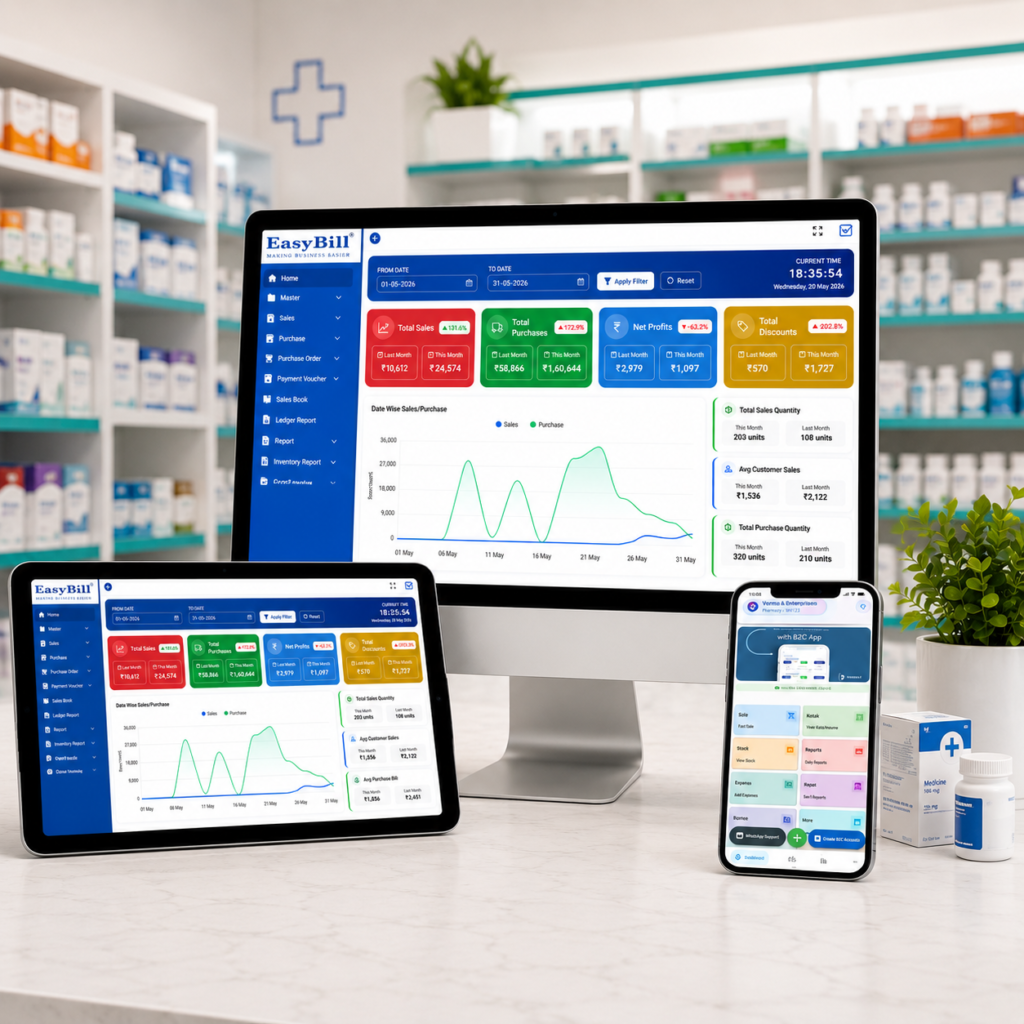
Medical stock management software dashboard for pharmacy inventory and billing; What Is Stock in a Medical Store

Pharma Distribution Software: Powerful & Reliable Solution for Smarter Drug Distribution

Last updated: August 25, 2026 Quick answer: Pharma distribution software helps distributors manage medicines, batches, expiry dates, purchase orders, suppliers, retailers, invoices, stock and deliveries in one connected workflow. Definition: Pharma distribution software is a digital system designed to manage pharmaceutical wholesale distribution, inventory, orders, billing and delivery operations. Pharma distribution is a fast-moving business where accuracy matters at every step. Distributors have to manage medicines, batches, expiry dates, purchase orders, suppliers, retailers, invoices, GST records, stock levels, payments and deliveries—often across hundreds or thousands of products. A small stock or billing mistake can quickly become a costly operational problem. That is where pharma distribution software can make a real difference. Instead of managing orders, inventory and accounts through separate registers or spreadsheets, distributors can bring important operations into one connected system. The result is better visibility, faster order processing and more organized day-to-day management. In this guide, we explain what pharma distribution software is, how it works, which features matter most, how it can improve pharmaceutical distribution and what to check before choosing a solution. What Is Pharma Distribution Software? Pharma distribution software is a business management system designed for pharmaceutical distributors, wholesalers, stockists and medicine suppliers. It helps manage the complete distribution workflow, from purchasing medicines from suppliers to selling and delivering them to pharmacies, hospitals, clinics or other business customers. A good system can connect inventory, purchase management, sales orders, invoicing, batch tracking, expiry management, customer accounts, supplier records and reports. This reduces duplicate data entry and gives the distributor a clearer view of business activity. Why Do Pharmaceutical Distributors Need Distribution Software? Pharmaceutical distribution is different from ordinary retail because inventory can involve multiple batches, expiry dates, purchase prices, selling rates, schemes, customers and suppliers. Managing these details manually becomes increasingly difficult as the business grows. Pharma distribution software brings these activities into a more structured workflow so teams can spend less time searching through paperwork and more time serving customers. How Does Pharma Distribution Software Work? The basic workflow starts when a distributor purchases medicines from a manufacturer or supplier. Product details, quantities, batch numbers, expiry dates and purchase information are recorded in the system. When retailers or other customers place orders, the distributor can create sales orders and invoices from the available stock. Because these activities are connected, a sale can update inventory and customer records without requiring the same information to be entered repeatedly. 15 Powerful Features of Pharma Distribution Software 1. Pharmaceutical Inventory Management Inventory is the heart of pharmaceutical distribution. The software should provide a clear view of available stock, product movement, purchases and sales. This helps distributors understand what is available and where replenishment may be required. 2. Batch-Wise Stock Tracking The same medicine can be available in several batches with different expiry dates and purchase costs. Batch-wise tracking makes it easier to identify the correct stock and maintain organized transaction records. 3. Medicine Expiry Management Expiry information should remain connected with inventory. A distribution system can help users identify stock approaching expiry so the team can review it according to its internal inventory process. 4. Purchase Management Record purchase invoices, suppliers, quantities, rates and incoming stock in one place. Better purchase records help distributors understand purchasing patterns and maintain more accurate inventory. 5. Sales Order Management Distributors may receive frequent orders from pharmacies and retailers. A structured order workflow can help teams process orders faster and reduce manual mistakes. 6. Fast GST Billing Billing software can help generate professional invoices with configured tax details. Businesses should always verify current GST requirements through the official GST portal. 7. Barcode Support Barcode scanning can speed up product identification and reduce manual entry. This is particularly useful when distributors handle a large number of SKUs. 8. Customer and Retailer Management Maintain retailer, pharmacy, hospital or clinic information along with transaction history. Searchable customer records make repeat orders and account reviews easier. 9. Supplier Management Keep supplier information and purchase history organized. This can help teams review previous purchases and manage supplier relationships more efficiently. 10. Credit and Payment Tracking Many distribution businesses operate on credit. A connected system can help track invoices, outstanding balances and payment records so owners have better visibility over receivables. 11. Sales and Purchase Reports Reports help distributors understand sales performance, purchase activity, stock movement and customer transactions. Better reporting supports more informed business decisions. 12. Low-Stock Monitoring Low-stock visibility helps distributors identify products that may need replenishment. This can reduce the risk of losing sales because fast-moving medicines are unavailable. 13. Return Management Returns can occur for several operational reasons. A suitable distribution system should make it easier to record returned products and keep inventory records aligned with actual stock. 14. Multi-User Access Sales teams, billing staff, warehouse employees and managers may need different access levels. Role-based access can help control who can view or modify different business functions. 15. Business Dashboard A dashboard can provide a quick overview of sales, purchases, inventory and receivables. Instead of checking several registers, managers can start with a consolidated view of important business information. Benefits of Pharma Distribution Software The biggest benefit is not simply automation. It is the connection between different parts of the distribution business. Pharma Distribution Software vs Manual Management Business Area Manual Management Distribution Software Inventory Registers and spreadsheets Centralized digital records Batch tracking Time-consuming Organized batch records Expiry monitoring Manual checking Digital expiry information Orders Multiple manual steps Structured order workflow Billing Manual data entry Faster connected billing Reports Manual preparation System-generated reports where supported Customer balances Separate records Centralized account history How to Choose the Best Pharma Distribution Software Do not select software only because it offers billing. Pharmaceutical distribution needs a complete workflow covering inventory, purchases, sales and customer accounts. Before making a decision, check these areas: Pharma Distribution Software and Pharma Billing Software: What Is the Difference? Pharma billing software mainly focuses on creating medicine sales invoices and connecting billing with inventory and related pharmacy operations. Pharma distribution software goes further

Pharma Distribution Software: Powerful & Reliable Solution for Smarter Drug Distribution Read More »

Medical stock management software dashboard for pharmacy inventory and billing; What Is Stock in a Medical Store

Medicine Expiry Management Software: Practical Pharmacy Stock Control

Last updated: August 25, 2026 In short: Medicine Expiry Management Software helps pharmacies record expiry dates, batches and quantities so expiry-sensitive stock can be reviewed and managed systematically. Medicine Expiry Management Software is one of the most important parts of running a pharmacy, chemist shop or medical store. A medicine may look like ordinary inventory, but every product can have a batch number, expiry date, purchase price, selling price and quantity. When these details are managed manually, it becomes easy to overlook stock that is approaching expiry. Key takeaway: Medicine Expiry Management Software is most useful when expiry dates, batches, quantities, purchases and sales stay connected in one pharmacy workflow. Before choosing a system, test the complete process from medicine purchase and batch entry to billing, stock update and expiry review. Who is this guide for? This guide is for pharmacy owners, chemist shops, medical stores, pharmacy managers and growing retail pharmacies. Use it when replacing manual expiry registers, comparing pharma billing software, improving batch-level inventory control or deciding which expiry and stock features your team needs. Practical use case: During a software demo, take a small set of real medicine products with different batch numbers and expiry dates. Add the stock, create a sample sale, check the inventory movement and then review the approaching-expiry information. This gives the pharmacy team a repeatable way to evaluate the workflow. That is where medicine expiry management software and pharma billing software work together. A connected pharmacy system can link billing, inventory, batches, expiry dates, purchases and reports so pharmacy owners have a clearer view of what is available and what needs attention. In this guide, we explain how medicine expiry management works, why it matters, which features to look for and how the right pharma billing software can make pharmacy inventory easier to control. What Is Medicine Expiry Management Software? Medicine expiry management software is a digital system that helps pharmacies record, monitor and manage medicine expiry information. Instead of checking expiry dates product by product in registers or spreadsheets, the pharmacy team can keep expiry data connected with medicine inventory and sales records. A good system can help identify medicines that are nearing expiry, organize batch-level information and support better stock decisions. The exact alerts and workflows depend on the software configuration, so pharmacy owners should choose a system that matches their operational needs. Why Is Medicine Expiry Management Software Important for Pharmacies? Expiry management is not simply an inventory task. It affects purchasing, stock rotation, customer service and financial control. If expired or near-expiry products are not identified in time, a pharmacy may face avoidable stock losses and additional manual work. How Does Medicine Expiry Management Software Work? The workflow is straightforward. When medicines are added through purchases, the pharmacy records product, quantity, batch and expiry information. As sales happen, the inventory is updated. The system can then use the stored expiry information to help the team identify products that need review. Powerful Features to Look for in Medicine Expiry Management Software 1. Batch-Wise Medicine Tracking Batch-wise tracking is essential because the same medicine can exist in multiple batches with different expiry dates. A pharmacy system should make it easy to find the batch connected with a particular stock record or transaction. 2. Expiry Date Tracking The software should store expiry dates with medicine records and make them easy to review. Clear expiry information helps pharmacy staff focus on products that need attention instead of checking every item manually. 3. Expiry Alerts and Notifications Where supported, alerts can help users identify medicines approaching a configured expiry window. Alerts should be treated as a management aid, not a replacement for responsible physical stock checks. 4. Pharmacy Inventory Management Expiry management becomes more useful when connected to inventory. Pharmacy staff can see stock quantities, movement and expiry information together rather than maintaining separate records. 5. Fast Pharma Billing Billing and inventory should work together. When a medicine is sold through pharma billing software, the transaction can update stock records and contribute to accurate inventory reporting. 6. Purchase Management Purchase entries provide the foundation for accurate stock records. A connected system can keep supplier, quantity, batch and expiry information associated with incoming inventory. 7. Barcode Billing Barcode scanning can speed up product selection and reduce manual entry at the counter. For pharmacies with a large product range, this can make everyday billing more efficient. 8. Low-Stock and Inventory Reports Expiry management should not operate in isolation. Stock and movement reports can help owners understand which products are selling, which are slow-moving and where purchasing decisions may need review. 9. Searchable Medicine Records When staff can quickly search a medicine and view its relevant stock information, daily inventory checks become easier. This is especially useful for pharmacies handling a large number of SKUs. 10. Multi-User Access Growing pharmacies may have several employees or counters. Role-based access can help owners control who can view or modify different areas of the system. Pharma Billing Software and Expiry Management: Why They Should Work Together Many pharmacies think of billing and inventory as separate activities. In practice, they are closely connected. Every sale changes stock. Every purchase adds stock. Every batch has its own information. Expiry management therefore becomes more reliable when it is part of the same workflow. Pharma billing software can connect sales invoices with inventory records, while expiry management helps the pharmacy understand which stock requires attention. This integrated approach can reduce duplicate data entry and make reports more useful. Medicine Expiry Management Software vs Manual Tracking Area Manual Tracking Software-Based Management Expiry records Registers or spreadsheets Digital medicine records Batch tracking Time-consuming Organized by product and batch Stock updates Often manual Connected with transactions Search Requires manual checking Faster digital search Reports Manual preparation System-generated where supported Billing connection Separate process Can be integrated How to Choose the Best Pharma Billing Software for Expiry Control Do not select software only because it creates invoices. If expiry management is a priority, evaluate the complete

Medicine Expiry Management Software: Practical Pharmacy Stock Control Read More »

Medical stock management software dashboard for pharmacy inventory and billing; What Is Stock in a Medical Store

Ultimate Pharma Billing Software Guide: Drug Inventory, GST & Pharmacy Management

Last updated: August 25, 2026 Quick answer: Pharma billing software connects pharmacy invoices with medicine inventory, purchases, batches, expiry dates, GST records and reports to create a more organized workflow. Definition: Pharma billing software is a digital system designed to manage pharmaceutical billing together with related inventory and business records. Running a pharmacy is about much more than creating invoices. Every day, a medical store has to manage medicines, batches, expiry dates, purchases, suppliers, GST billing, stock levels, customer accounts and fast service at the counter. That is why choosing the right pharma billing software can make a major difference. Modern pharmacy businesses need more than a basic billing screen. They need a connected system that links sales with inventory, purchasing and reporting. The right drug inventory management software can help a pharmacy owner know what is in stock, which batch is moving, which medicines are nearing expiry and when replenishment may be needed. What Is Pharma Billing Software? Pharma billing software is software designed for pharmacies, chemist shops, medical stores and medicine retailers. It helps create sales invoices while connecting billing with medicine inventory, purchases, batches, expiry dates, customers and business reports. In simple terms, when a medicine is sold, the system can generate the bill and update the relevant stock record. This reduces repetitive data entry and gives the pharmacy team a clearer view of daily operations. What Is Drug Inventory Management Software? Drug inventory management software is a pharmacy-focused inventory system used to organize medicine stock from purchase to sale. It can help businesses maintain product details, quantities, batches, expiry dates, purchase prices, selling prices and stock movement. For a pharmacy, inventory is not simply a count of products. The same medicine can have different batches, expiry dates and purchase costs. A good system therefore needs to make stock information easy to search, update and review. Why Do Pharmacies Need Pharma Billing Software? Manual billing and spreadsheet-based stock management can become difficult when a pharmacy handles hundreds or thousands of products. A pharmacy billing system brings repetitive tasks into one workflow and helps staff work faster with fewer manual steps. 10 Powerful Features of Pharma Billing Software 1. Fast Pharmacy Billing A busy pharmacy cannot afford a slow checkout process. A focused billing workflow helps staff search medicines, enter quantities, apply applicable tax details and generate invoices quickly. 2. Medicine Inventory Management Inventory management keeps product quantities connected with sales and purchases. Instead of manually updating registers, pharmacy teams can review current stock from the software. 3. Batch Tracking Batch information is important for medicine businesses. A pharmacy management system can keep batch details connected with products and transactions so records are easier to find when required. 4. Expiry Management Expiry tracking helps pharmacy owners identify medicines approaching their expiry dates. Better visibility can support timely stock review and reduce avoidable inventory losses. 5. Barcode Billing Barcode scanning can speed up product selection and reduce errors caused by manually typing medicine names or codes. It is particularly useful for pharmacies with a large product range. 6. Purchase Management Record purchases, supplier information and incoming stock in the same system. This creates a useful link between procurement, inventory and sales. 7. Supplier Management Organized supplier records make it easier to review purchase history, outstanding information and frequently purchased products without depending on paper files. 8. Sales and Business Reports Reports can help owners understand sales, purchases, stock movement and other business metrics. Decisions become easier when they are based on current records instead of manual calculations. 9. Customer and Credit Management Where pharmacies offer credit sales, organized customer balances can make account tracking and follow-up easier. Customer history can also help staff find previous transactions quickly. 10. Multi-User and Multi-Branch Support Growing pharmacy businesses may need multiple users, branches or counters. Role-based access and centralized records can help owners maintain better operational control. Pharma Billing Software vs Manual Billing Area Manual Billing Pharma Billing Software Billing More manual work Faster workflow Stock updates Manual entry Connected with transactions Batch tracking Difficult to maintain Organized records Expiry monitoring Easy to miss Easier to review Reports Manual calculations System-generated reports Barcode billing Limited Available with compatible setup How Does Pharma Billing Software Work? The important part is the connection between these activities. A medicine sale affects billing, inventory and reporting at the same time. This connected workflow is one of the biggest advantages over separate registers or spreadsheets. How to Choose the Best Pharma Billing Software Do not choose software only because it creates invoices. Before buying, check whether it matches your pharmacy’s actual workflow. Why EasyBill ERP for Pharmacy Businesses? EasyBill ERP Pharmacy Billing Software brings billing, inventory and pharmacy operations together. The platform is designed to help businesses manage pharmacy billing, POS sales, inventory, purchases and related business records from one system. If you are comparing options for a chemist shop, you can also read our complete guide to chemist billing software. For businesses that need broader billing and inventory functionality, explore EasyBill ERP. For pharmacy businesses in different locations, our related resources such as pharmacy software in Delhi can also help you compare local requirements and workflows. GST Billing and Pharmacy Compliance Pharmacy businesses should configure billing and tax settings according to their applicable requirements. For authoritative GST information, always verify current rules and guidance on the official GST portal. Frequently Asked Questions About Pharma Billing Software What is pharma billing software? Pharma billing software is a pharmacy-focused system that helps create medicine invoices while managing related tasks such as inventory, purchases, batches, expiry dates, customers and reports. What is drug inventory management software? Drug inventory management software helps pharmacies track medicine stock, batches, expiry dates, purchases, sales and stock movement in an organized digital system. Can pharma billing software manage medicine inventory? Yes. Pharmacy-focused billing systems can connect sales and purchases with inventory records and may include batch, expiry and low-stock management features. Does pharma billing software support GST billing? Many pharmacy billing systems provide

Ultimate Pharma Billing Software Guide: Drug Inventory, GST & Pharmacy Management Read More »

Chemist Billing Software: A Practical Guide to Faster Billing & Inventory

Last updated: August 25, 2026 In short: Chemist billing software connects billing with medicine stock, batches, expiry dates, purchases, GST invoices and reports to simplify daily chemist-shop operations. What it means: Chemist billing software is a digital billing system designed for medicine retailers and chemist shops, with related inventory and purchasing functions. Running a chemist shop means dealing with more than just billing. You also have to keep medicine stock accurate, track batches and expiry dates, manage purchases, handle GST invoices, and serve customers quickly. Chemist billing software brings these everyday tasks into one place so you can spend less time on paperwork and more time running your store. In this guide, we explain what chemist billing software is, which features matter most, how it helps a medical store, and what to check before choosing a solution. What Is Chemist Billing Software? Chemist billing software is a pharmacy-focused system that helps medical stores create invoices, manage medicine inventory, track batches and expiry dates, record purchases, manage suppliers, and view sales reports from a single dashboard. Unlike basic invoicing tools, pharmacy billing software is designed around the way chemist shops actually work. A good system connects billing with stock, so a sale can update inventory and business records without repeated manual entry. Why Do Chemist Shops Need Billing Software? Manual billing can become difficult as the number of medicines, customers, suppliers and daily transactions grows. A digital system can reduce repetitive work and give the owner a clearer view of what is selling, what is running low and what needs attention. Key Features of Chemist Billing Software 1. Fast Pharmacy Billing Search a medicine, scan its barcode, select the quantity and generate the invoice quickly. This is especially useful during busy hours when customers do not want to wait in a long billing queue. 2. Medicine Inventory Management Track medicine quantities, purchases, sales and stock movement from one system. This helps reduce the chance of relying on notebooks or disconnected spreadsheets. 3. Batch and Expiry Tracking Medicine businesses need visibility into batch numbers and expiry dates. A pharmacy-focused system can help staff identify products approaching expiry and manage stock more carefully. 4. GST Billing and Invoices GST-enabled billing makes it easier to create structured invoices and maintain transaction records. For current GST information and official guidance, refer to the official GST portal. 5. Barcode Billing Barcode scanning can speed up product selection and reduce manual typing. It is particularly useful for stores with a large medicine catalogue. 6. Purchase and Supplier Management Record purchases, suppliers and stock received so the store owner can understand where products came from and how inventory is moving. 7. Reports and Business Insights Useful reports can show sales, purchases, stock movement and other business information. Instead of checking multiple registers, owners can use reports to make quicker operational decisions. Chemist Billing Software vs Manual Billing Task Manual Process Chemist Billing Software Invoice creation More manual work Faster digital billing Stock updates Manual entry Linked with transactions Batch tracking Register or spreadsheet Centralized records Expiry monitoring Manual checking Software-based tracking Barcode billing Limited Supported by compatible systems Reports Time-consuming Generated from business data How to Choose the Best Chemist Billing Software Do not choose software only because it promises “fast billing.” For a chemist shop, look at the complete workflow. Check whether it supports medicine inventory, batch and expiry tracking, GST billing, barcode scanning, purchases, suppliers, reports and user access. EasyBill ERP for Chemist and Medical Stores EasyBill ERP Pharmacy Billing Software is built for pharmacies, chemist shops and medical stores that want to manage billing and inventory together. Depending on the business setup, it can help with GST billing, inventory, barcode billing, purchases, suppliers, sales reports and medicine-related stock management. If you are comparing pharmacy solutions, you can also read our Medical Store Billing Software guide and our Chemist Management System guide for a broader look at pharmacy operations. Frequently Asked Questions About Chemist Billing Software What is the best billing software for a chemist shop? The best chemist billing software is one that fits your store workflow and supports fast billing, medicine inventory, batch and expiry tracking, GST invoices, barcode billing, purchases and useful reports. EasyBill ERP is one option designed for pharmacy and medical-store operations. Can chemist billing software manage medicine inventory? Yes. Pharmacy-focused billing systems can connect sales and purchases with inventory, helping store owners monitor quantities and stock movement. Can it track medicine expiry dates and batches? Yes, a suitable pharmacy system can maintain batch and expiry information so staff can identify stock that needs attention before it becomes a problem. Does chemist billing software support GST billing? Many pharmacy billing systems support GST-enabled invoices and transaction records. Always verify the software’s current features and configuration for your business before implementation. Is chemist billing software useful for a small medical store? Yes. A small store can benefit from faster billing, organized inventory, better purchase records and easier reporting without needing a complex enterprise system. Final Takeaway Chemist billing software is not just an invoice generator. The real value comes from connecting billing, medicine inventory, batches, expiry dates, purchases and reports in one workflow. If your store is spending too much time on manual entries or struggling to keep stock organized, moving to a pharmacy-focused billing system can make daily operations much easier. Looking for a pharmacy billing solution? Explore EasyBill ERP Pharmacy Billing Software or review the EasyBill ERP pricing plans.

Chemist Billing Software: A Practical Guide to Faster Billing & Inventory Read More »

Medical stock management software dashboard for pharmacy inventory and billing; What Is Stock in a Medical Store

Pharmacy Software in Moradabad: A Practical Guide for Medical Stores

A pharmacy counter gets messy when the same information lives in three places. One register has purchases, another has sales, and someone is still checking a notebook to find out whether a medicine is available. For a medical store in Moradabad, pharmacy software is useful when it brings those routine jobs into one workable process. What should a pharmacy system actually make easier? Start at the counter. A customer asks for a medicine. The staff member searches for it, checks the available quantity, prepares the bill and moves to the next customer. Behind that sale, stock has changed. If the medicine was purchased recently, its batch and expiry information also need to remain traceable. That is the part worth automating. A pharmacy system should not make a simple sale feel like a data-entry exercise. For a Moradabad medical store, the useful features are practical Different stores have different workloads, so there is little value in buying software simply because its feature list is long. Look first at the jobs your staff repeat every day. Medicine search and fast billing Barcode-based product selection where compatible products and hardware are available GST invoice creation and configurable tax details Purchase and supplier records Medicine stock tracking Batch and expiry information Customer records where they are useful Sales, purchase and inventory reports Watch what happens to stock after a sale This is one of the simplest software tests. Add or select a medicine, complete a sale and then check the inventory record. The stock figure should reflect the transaction according to the system’s workflow. Then try the same medicine from another batch. You want to understand how the software identifies the batch, records quantities and shows expiry information. A product name alone is not enough for pharmacy stock control. Purchases matter just as much as sales Many software demos spend most of their time on billing because it looks impressive. For a pharmacy owner, the purchase side deserves the same attention. Ask how a new supplier invoice is entered, where purchase history is stored and how incoming quantities become available stock. If the process is difficult, the billing screen cannot fix the underlying record-keeping problem. Expiry management should be easy to check Expiry information is useful only when staff can actually find it. Ask the vendor to show a medicine with a recorded expiry date and demonstrate how the store reviews stock that needs attention. For a deeper look at this specific workflow, see medicine expiry date tracking software. Where EasyBill fits EasyBill Pharmacy Billing Software is built around the operational side of pharmacy billing and inventory. If your store needs batch-level stock handling, review the pharmacy software with batch management guide as well. If low-stock visibility is a bigger issue, the stock alert software for medical shops page covers that workflow separately. Who should consider it? A small chemist does not need every feature available in a large pharmacy platform. If your main problems are billing, stock records, purchases and expiry checks, start there. A growing store with more staff or more transactions should also look closely at user access, reporting and how quickly a new employee can learn the counter workflow. Questions to ask before buying Don’t ask only, “Does it have pharmacy management?” Give the vendor a real example and ask them to show the complete process: Record a medicine purchase. Find that medicine in stock. Create a customer bill. Show the updated stock. Locate the relevant batch and expiry information. Open the sales or inventory report. If the workflow feels natural to the people who will actually use it, that matters more than another ten items on a feature page. Frequently Asked Questions What is pharmacy software in Moradabad? It is software used by a pharmacy or medical store to manage billing, medicine inventory, purchases and related records. Can a small medical store use pharmacy software? Yes. A small store can use the functions it actually needs instead of adopting every available module. Can pharmacy software track medicine batches? Software with batch management can keep batch information connected with the relevant medicine and stock record. Can EasyBill create GST invoices? EasyBill provides GST-related billing functionality. The business should configure its tax details according to its applicable requirements. Before you choose Use your own pharmacy workflow during the demo. If staff can move from purchase to stock to billing without unnecessary duplicate entry, you have a much better basis for comparing software than a feature-counting exercise.

Pharmacy Software in Moradabad: A Practical Guide for Medical Stores Read More »

Medical stock management software dashboard for pharmacy inventory and billing; What Is Stock in a Medical Store

Pharmacy Software in Trivandrum: What a Medical Store Actually Needs

Good pharmacy software should make a busy counter easier to run, not give staff another complicated screen to manage. For a medical store in Trivandrum, the useful starting point is simple: find the medicine, bill it, update stock and keep purchase, batch and expiry records in order. Start with the way your pharmacy works Before comparing software, look at the counter during a normal working day. How many steps does an employee take to find a product? How is incoming stock recorded? If the same medicine arrives in another batch, where is that information kept? Those questions tell you more about the right system than a long list of software features. What should Trivandrum pharmacy software cover? A practical system should bring the core records together without forcing every store into the same workflow. Medicine search and billing Barcode support where the products and hardware support it GST invoice creation Medicine stock management Purchase and supplier records Batch and expiry information Customer records where useful Sales, purchase and stock reports Don’t stop the demo at the billing screen Billing is only one part of pharmacy work. Ask the vendor to show what happens to stock immediately after a sale. Then enter a purchase. Check whether the new quantity appears in inventory and whether batch and expiry details remain attached to the relevant stock record. This is where you find out whether the software is genuinely connected or simply has several separate modules. Batch and expiry records deserve a closer look The same medicine can arrive in different batches. Your staff should be able to distinguish those records when checking stock. Expiry information should be just as easy to review. Ask the vendor to open an actual product record and show how the pharmacy identifies stock that needs attention. For a focused guide, see pharmacy software with batch management and medicine expiry date tracking software. Where EasyBill can fit EasyBill Pharmacy Billing Software brings pharmacy billing and inventory workflows together. The important step is still the demo: use the type of medicine purchase and sale your own store handles instead of accepting a generic presentation. Do you need a large pharmacy system? Not necessarily. A small medical store may mainly need billing, purchases, stock, batch and expiry records. A larger operation may need more user controls, reporting or branch-level visibility. Buy around the problem you are actually trying to solve. GST billing should be part of the normal workflow EasyBill provides GST-related billing functionality. Your tax settings should match the business’s applicable requirements, and current guidance should be checked through the official GST Portal when required. Questions worth asking the vendor Can staff find a medicine quickly? What happens to stock after a sale? How are purchases entered? Can different batches of the same medicine be distinguished? Where are expiry dates shown? Can sales and inventory reports be opened without manual calculations? What happens if the pharmacy changes staff or needs to export its records? These questions turn a software demo into a real test of the product. Frequently Asked Questions What is pharmacy software in Trivandrum? It is software used by medical stores and pharmacies to manage billing, inventory, purchases and related medicine records. Is it useful for a small pharmacy? Yes. A small store can focus on the workflows it uses every day rather than paying attention to features it does not need. Can pharmacy software manage medicine batches? Software with batch management can connect batch information with the relevant medicine and inventory records. Does EasyBill provide GST billing? EasyBill provides GST-related billing functionality. The business remains responsible for maintaining the correct applicable tax configuration. Make the demo realistic Take one real purchase and one real sale from your pharmacy and ask the vendor to reproduce the process. If the staff can understand it without constantly switching between screens or entering the same information again, you have something meaningful to compare.

Pharmacy Software in Trivandrum: What a Medical Store Actually Needs Read More »

Medical stock management software dashboard for pharmacy inventory and billing; What Is Stock in a Medical Store

Pharmacy Software in Sirsa: What to Check Before You Buy

A medical store has two jobs running at once: serve the person standing at the counter and keep the records behind that sale correct. In Sirsa, pharmacy software is worth considering when it helps those two jobs use the same information instead of separate registers. Start with one ordinary sale Imagine a customer asks for a medicine. Staff search for the product, check the available quantity, prepare the invoice and complete the sale. That transaction should leave a clear record in the inventory. Now add the part that is easy to overlook: the medicine may have batch and expiry information, and the store may have purchased it from a supplier earlier. Good pharmacy software keeps those records connected enough to be useful. What should a Sirsa pharmacy look for? Don’t start by counting features. Start by listing the work your staff repeats every day. Medicine search and billing Barcode support where compatible products and hardware are available GST invoice creation Purchase and supplier records Medicine inventory Batch and expiry information Customer records where needed Sales and stock reports Test the purchase-to-sale connection Ask the vendor to enter a medicine purchase. Then find that medicine in stock and make a sample sale. Check what changed. This simple exercise shows whether billing and inventory are actually connected in the workflow. It also gives staff a chance to see whether the screens make sense before the software is introduced at the counter. Don’t treat expiry tracking as an afterthought Pharmacy inventory is not just a product name and quantity. Batch and expiry details matter when the store needs to review particular stock. Ask the vendor to show an actual medicine record and explain how staff find its batch and expiry information. If you need a dedicated reference, see medicine expiry date tracking software. What about low stock? A useful system should make it easier to see what has been sold and what remains. If your store regularly checks medicines before placing an order, ask whether the software provides the stock visibility your staff need. EasyBill also has a dedicated guide to stock alert software for medical shops, which is useful if low-stock monitoring is one of your main concerns. Where EasyBill fits EasyBill Pharmacy Billing Software combines pharmacy billing and inventory workflows. For batch-level stock handling, you can also review pharmacy software with batch management. The sensible approach is to test these workflows using the type of medicines, purchases and sales your own store handles. Do smaller stores need everything? No. A smaller chemist may get more value from straightforward billing, inventory, purchases and reporting than from a large collection of modules that staff rarely use. A busier operation should also examine permissions, reporting and how quickly new staff can learn the system. GST billing needs correct configuration EasyBill provides GST-related billing functionality. Configure the business’s tax details according to its applicable requirements and use the official GST Portal for current GST guidance when required. Five questions for the demo Can a new staff member find a medicine without unnecessary steps? Does a completed sale update the inventory record? Where do purchase and supplier records live? How are batches and expiry dates displayed? Can the owner open useful sales and stock reports? If the vendor answers these by showing the actual workflow, you will learn more than you would from another feature list. Frequently Asked Questions What is pharmacy software in Sirsa? It is software used by medical stores and pharmacies to organize billing, inventory, purchases and related medicine records. Can a small chemist use pharmacy software? Yes. The store can focus on the functions that match its daily workload. Can barcode billing be used in a pharmacy? Barcode-based product selection can speed up billing when compatible product data and hardware are available. Can pharmacy software keep batch information? Software with batch management can associate batch details with the relevant medicine and inventory record. Choose it at the counter, not from the brochure Take one purchase and one sale from your normal workflow and ask the vendor to reproduce both. If staff can understand the process quickly and the resulting records are easy to find, you have a much stronger basis for choosing pharmacy software.

Pharmacy Software in Sirsa: What to Check Before You Buy Read More »

Medical stock management software dashboard for pharmacy inventory and billing; What Is Stock in a Medical Store

Pharmacy Software in Gurgaon: Built for Busy Billing and Stock Work

A busy pharmacy does not need more software screens. It needs fewer repeated tasks. In Gurgaon, where a medical store may have customers waiting while staff are checking stock, receiving purchases or handling another counter task, the useful question is whether the software keeps those records together. What should happen during a busy sale? Staff search for the medicine, check availability, prepare the bill and complete the transaction. That sale should also leave the inventory in the right state. Now imagine the same counter handling a purchase entry or checking another batch of the same medicine. The software needs to support the back-office work without forcing staff to maintain separate records for each activity. Features worth testing in a Gurgaon pharmacy A feature list is useful only after the basic workflow works. Test these first: Fast medicine search and billing Barcode support where compatible products and hardware are available GST invoice creation Purchase and supplier management Medicine inventory Batch and expiry records Customer information where useful Sales, purchase and stock reports Speed matters, but accuracy matters with it A fast bill is not a good result if the stock record is wrong afterwards. During a demo, complete a sample sale and immediately open the inventory record. Then try a product that exists in more than one batch. Ask the vendor to show how the system identifies the relevant quantity and expiry information. This is a much better test than watching a salesperson move through prepared screens. Purchase management is part of the same job Pharmacies do not only sell medicines. They receive stock, check supplier invoices and add quantities to inventory. Ask the vendor to demonstrate a purchase from start to finish. Where is the supplier recorded? How are quantities added? Where do batch and expiry details appear? Can the owner find that purchase later? Keep expiry and low-stock workflows separate in your thinking Expiry tracking answers one question: which recorded stock needs attention because of its expiry information? Low-stock monitoring answers another: which products are running down and need replenishment? EasyBill has dedicated resources for medicine expiry date tracking and stock alerts for medical shops. Keeping these workflows clear makes the software easier to evaluate. Where EasyBill fits EasyBill Pharmacy Billing Software connects pharmacy billing and inventory workflows. If batch-level stock handling is a key requirement, see pharmacy software with batch management. The right choice still depends on the store’s actual routine. A single-counter pharmacy and a larger operation should not necessarily buy the same setup. Do not buy complexity you will not use A smaller store may mainly need billing, purchases, inventory and reports. A growing pharmacy should look more closely at user access, reporting and how easily staff can learn the system. More modules are not automatically better. The software should make the daily job clearer. GST billing needs proper setup EasyBill provides GST-related billing functionality. Configure tax details according to the business’s applicable requirements and use the official GST Portal for current guidance when necessary. Use a real pharmacy workflow during the demo Enter a medicine purchase. Check the resulting stock. Create a sample customer bill. Open the updated inventory. Check batch and expiry information. Review a sales or stock report. Ask a member of your own team to perform the same steps. If the person who will actually sit at the counter can understand the workflow, that is a much stronger signal than a polished presentation. Frequently Asked Questions What is pharmacy software in Gurgaon? It is software used by pharmacies and medical stores to manage billing, medicine inventory, purchases and related records. Can a small Gurgaon pharmacy use it? Yes. The store can use the workflows that match its actual needs instead of adopting every available feature. Can pharmacy software manage batches and expiry dates? Software with these functions can keep batch and expiry information connected with medicine inventory records. Does EasyBill provide GST billing? EasyBill provides GST-related billing functionality. The business should maintain the correct applicable tax configuration. The best test is your own counter Don’t choose pharmacy software from the feature page alone. Run one real purchase and one real sale through the demo. Check the records afterwards. That will tell you whether the system actually fits the way your Gurgaon pharmacy works.

Pharmacy Software in Gurgaon: Built for Busy Billing and Stock Work Read More »

Medical stock management software dashboard for pharmacy inventory and billing; What Is Stock in a Medical Store

Pharmacy Software in Karnal: A Practical Guide for Medical Stores

Pharmacy work is made up of small checks that repeat all day: what was sold, what arrived from a supplier, how much is left and which batch needs attention. For a medical store in Karnal, software is useful when it turns those checks into one clear workflow instead of another place to enter the same information. What should a Karnal pharmacy test first? Forget the long feature sheet for a moment. Give the software a normal pharmacy task. Search for a medicine. Check its stock. Create a bill. Then open the inventory and see what changed. After that, look at the purchase record and ask where batch and expiry information is stored. If those steps are easy, you have a useful starting point. The core jobs should stay connected A pharmacy normally deals with more than sales. Purchases add stock, sales reduce it, and the inventory record needs to remain useful afterwards. Medicine search and billing Barcode support where compatible hardware and product data are available GST invoice creation Purchase and supplier records Medicine inventory Batch and expiry information Customer records where required Sales, purchase and stock reports Why purchase records deserve attention A lot of pharmacy software demonstrations focus on the invoice because that is the easiest part to show. Ask for a purchase demonstration instead. Enter a supplier purchase. Check how quantities are added to stock. Then find the same medicine in the inventory. If it has batch and expiry information, ask the vendor to show exactly where those details are stored and retrieved. This tells you whether the software fits the back-office work as well as the counter. Batch and expiry checks should not be hidden The same medicine may be received more than once. Staff need a way to distinguish the recorded stock when batch information matters. Expiry records should also be easy to review. If this is a major requirement for your store, see the medicine expiry date tracking software guide. For batch-specific inventory, you can also review pharmacy software with batch management. Where EasyBill fits EasyBill Pharmacy Billing Software is designed around pharmacy billing and inventory workflows. The right setup depends on how your store actually handles medicines, purchases and sales, so the demo should use your normal workflow rather than a prepared example. Small pharmacy or growing store? The software requirement changes with the workload. A small medical store may need straightforward billing, inventory, purchases and reports. A growing operation may need stronger user controls, reporting and more visibility across daily transactions. There is no prize for buying the biggest system. If staff struggle to use it, the extra modules do not help. GST billing should fit the same workflow EasyBill provides GST-related billing functionality. Configure tax information according to the business’s applicable requirements and refer to the official GST Portal for current guidance when required. Questions to put to the vendor How quickly can staff find a medicine? Does a completed sale update inventory? How are supplier purchases recorded? Can different batches of the same medicine be identified? Where are expiry dates displayed? Can the owner review sales and stock reports? Can records be exported if the business changes systems later? These questions keep the discussion focused on the actual pharmacy instead of marketing language. Frequently Asked Questions What is pharmacy software in Karnal? It is software used by pharmacies and medical stores to manage billing, inventory, purchases and related medicine records. Can a small chemist use pharmacy software? Yes. A small store can use the workflows that match its daily requirements. Can pharmacy software support barcode billing? Barcode-based product selection can speed up billing when compatible product data and hardware are available. Can expiry dates be tracked? Software with expiry-management features can keep expiry information connected with the relevant product or batch record. Make the decision using your own workflow Take one purchase and one sale from the store and ask the vendor to reproduce them. Then have the person who normally handles the counter try it. That practical test will tell you far more about pharmacy software in Karnal than a list of features copied from a product brochure.

Pharmacy Software in Karnal: A Practical Guide for Medical Stores Read More »