
Last updated: August 25, 2026
Quick answer: Automatic reorder pharmacy software can help stores identify low-stock medicines and organize replenishment workflows so important products are less likely to be missed.
In simple terms: Automatic reorder pharmacy software is a digital inventory tool that uses stock information and reorder rules to support replenishment decisions.
Keeping essential medicines available is one of the daily challenges of running a pharmacy. A reliable pharmacy billing software solution can connect sales with inventory, while chemist inventory software can provide broader stock visibility. Some products move quickly, while others may stay on the shelf for weeks. If staff rely only on manual stock checks, it is easy to miss a product that needs replenishment. Automatic reorder pharmacy software helps pharmacy teams monitor stock levels and plan replenishment more efficiently.
Instead of waiting until a medicine runs out, a digital inventory system can use stock information and predefined reorder levels to highlight products that need attention. This can make purchasing more organized while helping the pharmacy maintain better control over its inventory.
Automatic Reorder Pharmacy Software
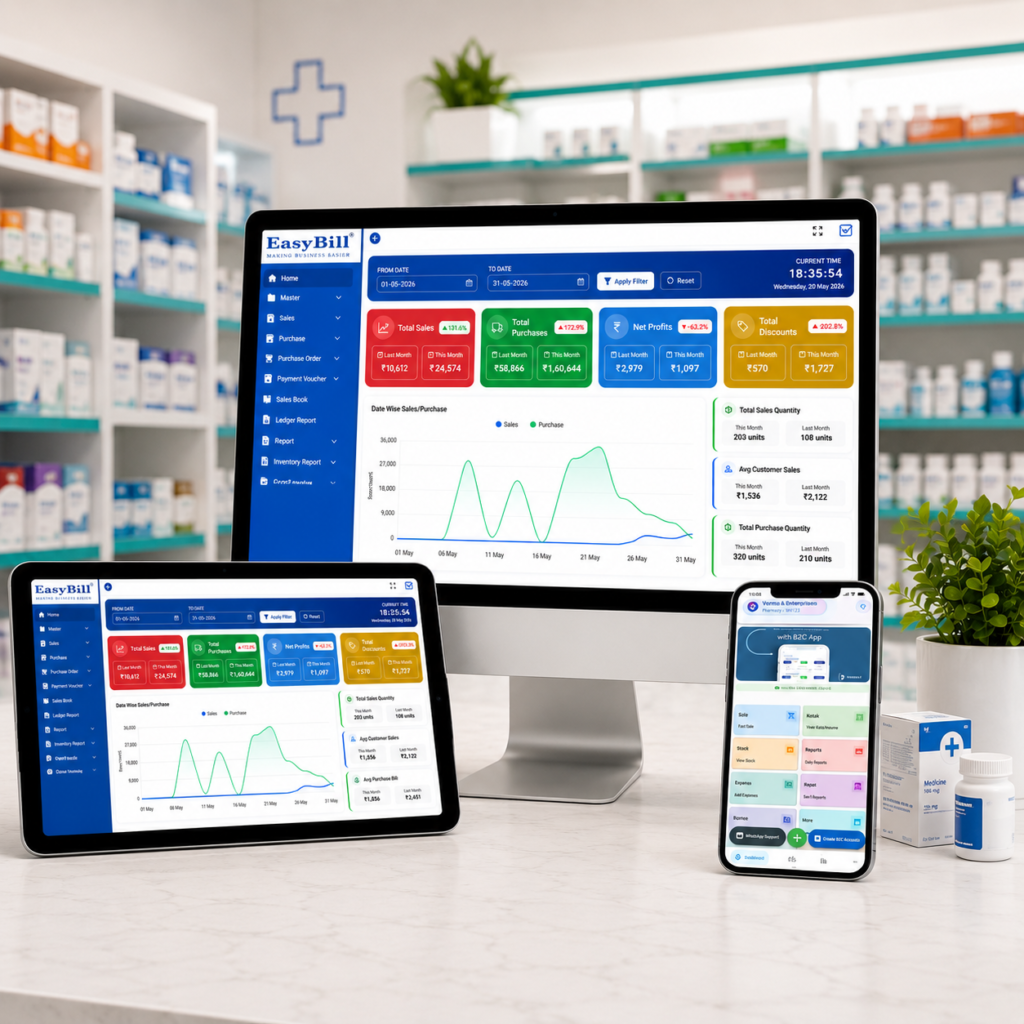
Table of Contents
- What Is Automatic Reorder Pharmacy Software?
- 7 Powerful Benefits
- Important Features
- How Automatic Reordering Works
- Manual Reordering vs Software-Based Reordering
- How EasyBill ERP Helps
- Frequently Asked Questions
What Is Automatic Reorder Pharmacy Software?
Automatic reorder pharmacy software is pharmacy inventory software that helps monitor medicine quantities and identify products that have reached a defined reorder level. Depending on the system and workflow, it can generate reorder suggestions or support purchase planning using current stock information.
This is useful for pharmacies that manage many products, multiple suppliers or fast-moving medicines. Rather than relying entirely on memory or manual shelf checks, the team can use inventory data to decide what needs replenishment.
7 Powerful Benefits of Automatic Reorder Pharmacy Software
1. Reduce Stock-Out Risk
Reorder-level monitoring helps staff identify products that are running low before they become unavailable. This is especially useful for frequently requested medicines.
2. Improve Purchase Planning
Current stock information gives pharmacy owners a clearer starting point for purchasing. Teams can review low-stock products before placing orders instead of discovering shortages at the last moment.
3. Save Time on Manual Checks
Checking shelves and registers repeatedly can take valuable staff time. A digital inventory system can make low-stock information easier to find and reduce routine checking.
4. Manage Fast-Moving Medicines Better
Sales and stock movement data can help identify medicines that require more frequent replenishment. This supports a more practical approach to maintaining essential inventory.
5. Improve Inventory Visibility
When billing, purchases and inventory are connected, pharmacy owners can get a more current view of stock. This makes it easier to understand what is available and what needs attention.
6. Avoid Unnecessary Overstocking
Reorder planning is not only about buying more. It is also about buying at the right time and in appropriate quantities. Better inventory visibility can help reduce avoidable excess stock.
7. Support Better Business Decisions
Stock and purchase reports can show product movement and replenishment patterns. Owners can use this information to review purchasing decisions and improve inventory planning over time.
Important Features to Look For
When choosing pharmacy software with reorder capabilities, look for features that match your store’s daily workflow:
- Reorder levels and low-stock alerts
- Medicine-wise inventory management
- Purchase and supplier management
- Batch and expiry tracking
- Pharmacy billing integration
- Stock movement reports
- Fast-moving and slow-moving product reports
- Purchase order management
- User access and data backup
How Automatic Reordering Works in a Pharmacy
A typical workflow begins by maintaining a suitable minimum or reorder level for a medicine. As sales are recorded, the available stock changes. When a product reaches its defined level, the software can flag it for review and help the pharmacy team prepare a replenishment order.
The exact level should depend on factors such as sales speed, supplier lead time, storage capacity and the pharmacy’s purchasing routine. Software supports the process, but the final purchasing decision should still reflect the store’s actual requirements.
Manual Reordering vs Software-Based Reordering
| Area | Manual Reordering | Software-Based Reordering |
|---|---|---|
| Low-stock identification | Regular manual checks | System-based visibility |
| Purchase planning | Depends on registers and memory | Uses current stock information |
| Fast-moving products | Harder to monitor consistently | Reports can highlight movement |
| Supplier records | May be scattered | Centralized digital records |
| Time required | Higher for routine checks | Lower for routine monitoring |
How EasyBill ERP Helps With Pharmacy Inventory
EasyBill ERP provides pharmacy-focused billing and inventory capabilities for medical stores and chemists. A connected workflow can help businesses manage medicine stock, purchases, billing and business reports from one platform.
Explore Pharmacy Billing Software for pharmacy-focused billing and inventory management. You can also read Chemist Inventory Software for broader stock-management requirements.
For low-stock monitoring, read Stock Alert Software for Medical Shop. For batch and expiry workflows, explore Pharmacy Software with Batch Management and Medicine Expiry Date Tracking Software.
Who Can Use Automatic Reorder Pharmacy Software?
Automatic reorder features can be useful for independent chemists, neighborhood medical stores, clinic pharmacies, retail pharmacy chains and growing medicine businesses. They become particularly valuable when a pharmacy handles a large product catalogue or many fast-moving items.
Why Reorder Management Matters
Good purchasing is a balance between availability and inventory cost. Ordering too late can create stock-outs, while ordering too much can tie up money and storage space. A structured reorder process helps pharmacy teams make purchasing decisions using current stock information rather than guesswork.
Frequently Asked Questions
What is Automatic Reorder Pharmacy Software?
It is pharmacy inventory software that monitors stock levels and helps identify medicines that have reached their defined reorder level for replenishment planning.
Can Automatic Reorder Pharmacy Software prevent medicine stock-outs?
It can help reduce stock-out risk by making low-stock products visible earlier, allowing the pharmacy team to review and replenish important items in time.
Can reorder software work with pharmacy billing?
Yes. When billing and inventory are integrated, sales can update stock information and support more accurate reorder monitoring.
Can pharmacy reorder software track batches and expiry dates?
Pharmacy-focused inventory systems can combine stock monitoring with batch and expiry information, helping stores manage inventory more comprehensively.
Is automatic reorder software useful for a small pharmacy?
Yes. Small pharmacies can benefit from better low-stock visibility, particularly when staff have limited time for manual inventory checks.
Does EasyBill ERP support pharmacy inventory management?
EasyBill ERP provides pharmacy-focused billing and inventory capabilities to help medical stores manage stock, purchases, billing and related business operations.
Final Thoughts
Keeping essential medicines available requires more than checking shelves when products look low. Automatic reorder pharmacy software can make replenishment planning more organized by connecting stock levels with purchasing and billing workflows.
When evaluating software, focus on reorder levels, low-stock alerts, medicine-wise inventory, batch and expiry management, supplier records, purchase orders, reporting and ease of use. For official GST invoicing guidance, see the CBIC GST Invoice Rules.
The best solution is one that fits the pharmacy’s real purchasing process.