Last updated: August 25, 2026
Quick answer: Stock alert software for a medical shop helps staff identify medicines approaching low-stock levels so replenishment can be planned before essential items run out.
In simple terms: Stock alert software is an inventory feature that monitors recorded quantities and flags products that need attention based on configured thresholds.
Running a medical shop becomes difficult when staff have to remember which medicines are running low. A connected pharmacy billing software system can link sales with inventory, while chemist inventory software provides broader stock visibility. A product may sell quickly today and be out of stock tomorrow, while slower-moving products can occupy valuable shelf space. Stock alert software for medical shop helps pharmacy teams keep track of inventory levels and identify products that need attention before they become a problem.
Instead of checking shelves and registers repeatedly, a digital stock system can bring product quantities, sales and purchase information together. This gives the store owner a clearer view of fast-moving medicines and items that may need replenishment.
Table of Contents
- What Is Stock Alert Software for Medical Shop?
- 7 Powerful Benefits
- Important Features
- How Stock Alerts Work
- Manual Stock Checking vs Software Alerts
- How EasyBill ERP Helps
- Frequently Asked Questions
What Is Stock Alert Software for Medical Shop?
Stock alert software for medical shop is an inventory management solution that helps store teams monitor medicine quantities and identify products that are reaching a defined stock level. It can connect inventory with pharmacy billing and purchasing so owners have better visibility into what is selling and what needs replenishment.
For a busy chemist, stock alerts are useful because manual checking can become difficult as the number of medicines increases. A digital system provides a more organized way to monitor inventory and plan purchases.
7 Powerful Benefits of Stock Alert Software for Medical Shop
1. Reduce Stock-Outs
Low-stock alerts can help staff identify products that need replenishment before available quantities become too low. This is particularly useful for fast-moving medicines. For larger operations, see Multi Branch Pharmacy Inventory System for branch-wise inventory management.
2. Monitor Fast-Moving Products
Sales and inventory information can show which products are moving quickly. Knowing these patterns helps store owners plan purchases according to actual demand.
3. Improve Purchase Planning
When low-stock information is available in one place, purchasing decisions become easier. Owners can review current quantities before creating new purchase orders.
4. Save Staff Time
Manual shelf checks and register updates take time. Automated or system-based alerts can reduce repetitive checking and allow staff to focus on customers and other pharmacy activities.
5. Improve Inventory Visibility
A centralized inventory record helps the owner understand product quantities without relying only on physical checks. This can make daily stock management more consistent.
6. Connect Stock With Billing
When billing and inventory are connected, sales can update stock records automatically or through a connected workflow. This helps maintain more current inventory information. You can also review Automatic Reorder Pharmacy Software for replenishment planning.
7. Support Better Business Decisions
Stock reports can help owners understand sales movement, purchases and inventory requirements. Better information can support more practical decisions about what to order and when.
Important Features to Look For
When choosing a stock management solution for a medical shop, look for features that match daily operations:
- Low-stock alerts and reorder levels
- Medicine-wise inventory management
- Batch and expiry tracking
- Purchase and supplier management
- Pharmacy billing integration
- GST invoices and records
- Stock movement reports
- Fast-moving and slow-moving product reports
- User access and data backup
How Stock Alerts Work in a Medical Shop
A typical process starts by setting or maintaining an appropriate stock level for each product. As medicines are sold, inventory quantities change. When a product reaches its alert level, the system can help the team identify it for review and replenishment.
The exact workflow depends on the software, but the main objective is simple: make important stock information visible before a product becomes unavailable.
Manual Stock Checking vs Software Alerts
| Area | Manual Checking | Software-Based Alerts |
|---|---|---|
| Low-stock monitoring | Regular manual checks | System-based visibility |
| Purchase planning | Depends on manual records | Uses current inventory information |
| Fast-moving items | Difficult to track consistently | Reports can highlight movement |
| Stock updates | Repeated entries | Can connect with billing |
| Time required | Higher | Lower for routine monitoring |
How EasyBill ERP Helps Medical Shops
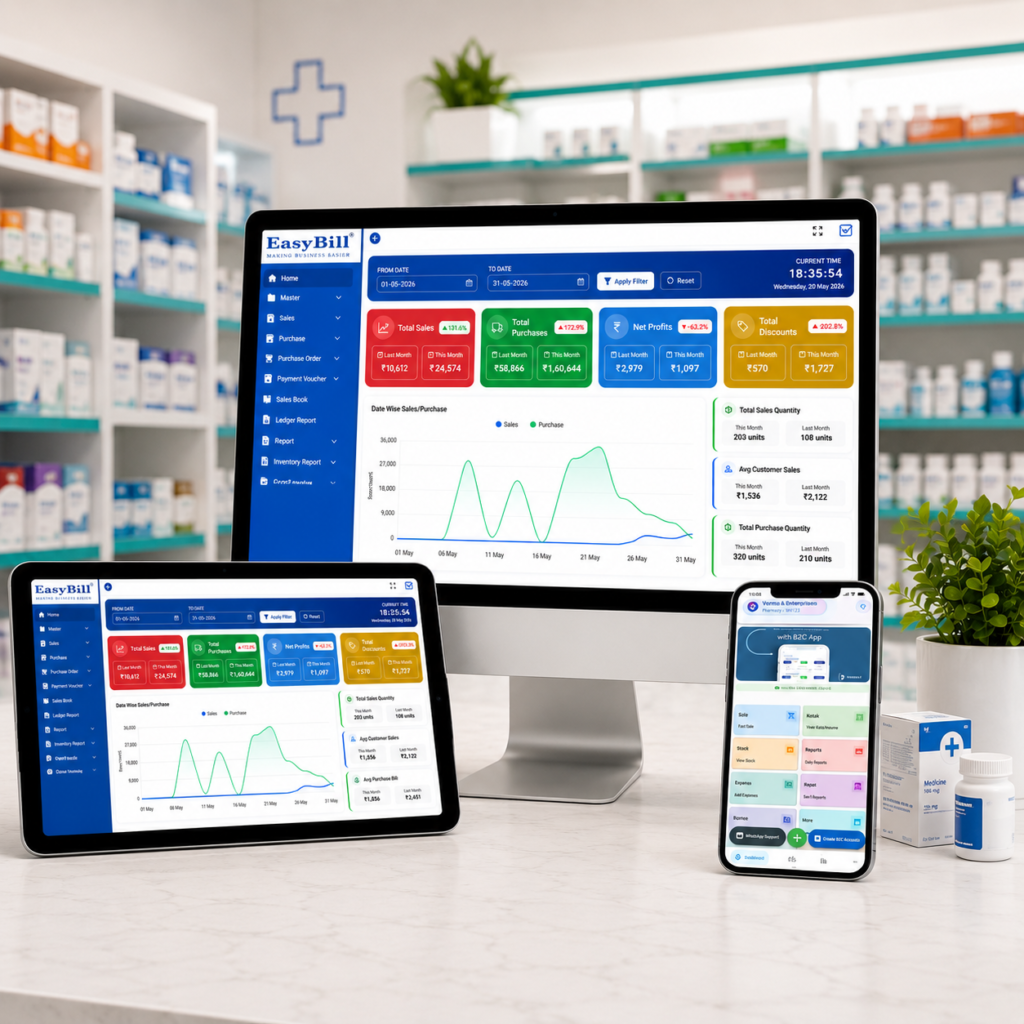
EasyBill ERP provides pharmacy billing and inventory capabilities designed for medical stores and chemists. A connected system can help manage billing, medicine stock, purchases and business reports from one workflow. For official GST invoicing guidance, refer to the CBIC GST Invoice Rules.
Explore Pharmacy Billing Software for pharmacy-focused billing and inventory management. You can also read Chemist Inventory Software for broader stock-management requirements.
For batch-focused inventory, see Pharmacy Software with Batch Management. For expiry tracking, explore Medicine Expiry Date Tracking Software.
Who Can Use Stock Alert Software?
Stock alert software can be useful for independent chemists, neighborhood medical stores, clinic pharmacies, retail pharmacy chains and growing medicine businesses. It becomes especially helpful when the product catalogue is large or many items move at different speeds.
Why Low-Stock Monitoring Matters
Stock availability affects customer service and purchasing. If a commonly requested medicine is unavailable, the store may lose a sale or a customer may need to look elsewhere. At the same time, excessive purchasing can tie up money in inventory. A balanced stock monitoring process helps owners make decisions with better information.
Frequently Asked Questions
What is stock alert software for medical shop?
It is software that helps medical stores monitor product quantities and identify medicines that have reached or are approaching their defined stock level.
Can stock alert software help prevent medicine stock-outs?
It can help reduce the risk by making low-stock products visible earlier, allowing staff to review and replenish important items in time.
Can pharmacy software connect stock alerts with billing?
Yes. Integrated billing and inventory software can update stock as sales are recorded, giving the store a more current inventory view.
Can stock software track medicine expiry and batches?
Pharmacy-focused systems can combine stock monitoring with batch and expiry information, helping stores manage inventory more comprehensively.
Is stock alert software useful for a small medical shop?
Yes. Small stores can benefit from low-stock visibility because even a limited team may not have time to manually check every product every day.
Does EasyBill ERP support medical shop inventory management?
EasyBill ERP provides pharmacy-focused billing and inventory capabilities to help medical stores manage stock, purchases, billing and related business operations.
Final Thoughts
Keeping the right medicines available is an important part of running a medical shop. Stock alert software for medical shop can make low-stock information easier to monitor and connect inventory with billing and purchasing workflows.
When choosing software, look for practical stock alerts, medicine-wise inventory, batch and expiry management, billing integration, reports and ease of use. A system that fits your daily workflow can make stock management more organized and predictable.